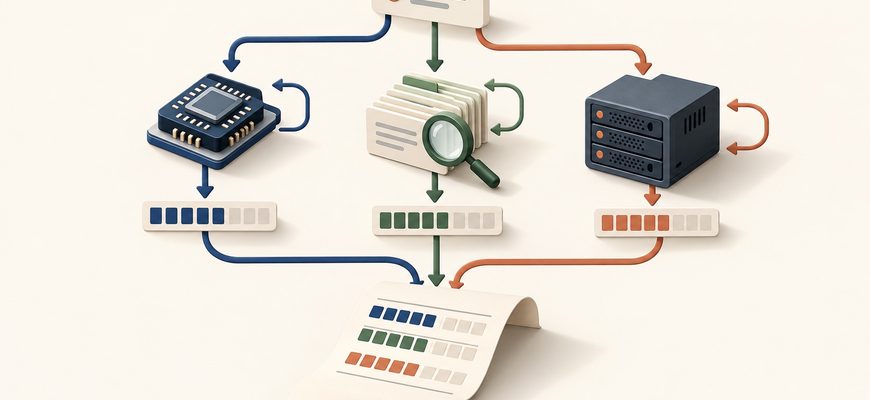
An AI agent does not need its own credit card to run up a bill. It needs access to a service that someone has already agreed to pay for.
The provider records usage against the account or project used for the request. That might belong to the company running the agent, the customer who connected an API key, or the platform selling the agent as a subscription. Who ultimately absorbs the expense depends on that arrangement: included usage, credits, metered charges or a separate provider bill.
One instruction from a person can produce hundreds of requests across those accounts. The useful question is which meters keep running while the agent works, and what stops them.
Follow the credential to the account
An API is a software interface through which one application requests something from another. In an agent system, the model can propose an operation, while the surrounding software executes it using configured credentials. That separation between choosing a tool and actually running it is also where billing responsibility becomes concrete.
Google Cloud offers a clear example: its API-key documentation explains that keys associate requests with a project for billing and quota purposes. The person typing into a chat window does not automatically become the billing identity for every service the application calls.
Consider two possible product arrangements. In one, an agent platform supplies the model connection and charges you through its own plan. In another, you connect your own paid API account, and the model provider records that usage there. A platform fee might still apply alongside it. These are different purchasing arrangements, so check what the product actually includes rather than inferring it from the chat interface.
The same agent might use your company’s model account, a separately billed search service and a cloud server paid for by another team. A single task identifier helps connect that activity internally; the providers will still maintain their own usage records.
A tool call is not a universal unit of cost
“Two hundred API calls” sounds precise until you ask what each call did. A database lookup, a long model response and a paid search are different operations with different charging rules.
In Anthropic’s tool-use documentation, model requests are billed for input and output tokens, the pieces of text processed and generated. Tool definitions and returned results contribute tokens too. Some provider-hosted tools add their own usage charges.
That creates two potential costs for an external lookup: the service doing the lookup and the model processing the returned information. Calling a function on your own server does not automatically incur a separate model-provider tool fee, but running the server still consumes resources.
Here is an illustrative accounting example, using invented rates rather than any provider’s current price list. Assume one task makes 80 model requests and 120 separately billed search requests, with the following total usage.
| Meter | Assumed usage and rate | Cost |
|---|---|---|
| Model input | 1.2 million tokens × $2 per million | $2.40 |
| Model output | 80,000 tokens × $8 per million | $0.64 |
| External search | 120 requests × $0.005 | $0.60 |
| Runtime | 0.2 hours × $1.80 per hour | $0.36 |
| Illustrative direct usage total | $4.00 | |
At those assumptions, 1,000 identical runs would consume $4,000 in direct usage. That multiplication is not a forecast: real tasks vary, and actual pricing may include discounts or commitments. It shows why a modest test run deserves a second look before it becomes an unattended recurring job.
The final answer can hide most of the work
A short response does not reveal how much text the model processed to produce it. In a multi-step task, earlier results may be included in later requests. Long pages and repeated records then affect subsequent input usage as well as the initial retrieval. Caching and context-management choices change the bill.
Retries add another source of work. An agent might receive a timeout even though the external operation completed. Repeating it without checking the outcome risks both more processing and duplicate actions, as in agent workflows that retry after an uncertain response.
Charging for failed or repeated requests is service-specific. A timeout at your application does not establish that the provider did no work, and it does not establish that a request is free.
For operations that change records, Stripe documents idempotency keys: identifiers that let the service recognize retries and avoid accidentally repeating the same operation. Such protection addresses duplicate effects. It does not erase the cost of additional model reasoning or other services involved in retrying.
Some expenses also survive the task. Stored execution records and files occupy space after the agent has stopped, which is one reason completed n8n workflows can keep filling a server’s disk. Whether that becomes an extra charge or pressure on a fixed-size server depends on the hosting arrangement.
An alert and a stop are different controls
A dashboard labelled “budget” does not tell you what happens when that budget is reached. Google Cloud explicitly distinguishes alerts-only budgets, which notify you without automatically capping usage, from controls that enforce a stop.
Its spend-cap documentation describes a separate mechanism for eligible services. The scope matters: a cap applies to a specified service and project. Enforcement is not instantaneous, requests already in flight finish, and some ongoing fixed costs continue.
For an agent developer, this argues for controls close to execution as well. Before dispatching more work, the application should check the task’s remaining allowance, restrict output size and bound retries. A model instruction saying “do not spend too much” supplies neither reliable accounting nor an enforcement point.
Parallel work needs particular care. Suppose ten workers each see $1 remaining and each launches an operation estimated to cost $0.80. Individually, every decision appears acceptable; together, they commit $8. A shared budget mechanism should reserve an allowance before dispatch, then reconcile it with reported usage. Estimates need margin where the final cost is uncertain.
A maximum request count is still useful for stopping loops. It should sit alongside cost and runtime limits, because ten large requests and ten small ones need not cost the same.
The bill needs to explain the result
Useful accounting connects the task to its model usage, tool operations, retries and execution time. Provider-reported usage should be reconciled with internal estimates, rather than treating a home-grown counter as the invoice.
The economic unit worth comparing is a successfully completed task. A cheaper run that leaves the job unfinished may require another run and human repair. A more expensive run might be worthwhile if it reliably produces the intended result.
Before giving an agent unattended access, establish which accounts it can charge and what the software does when the allowance runs out. Ideally, it preserves completed work and returns a useful partial result or requests approval for more spending. The person who asked the question should not have to discover those boundaries from an invoice.