- What if a mobile phone tower could float?
- How did internet reach a phone from a balloon?
- Internet connection
- Balloon relay
- Phone service
- The strangest part: steering without an engine
- Puerto Rico and Kenya: two different kinds of success
- Why Google Loon Shut Down a Working Network
- Can it connect?
- Does it help?
- Can it last?
- The part of the internet that could not float away
- The balloons stopped flying. Some of the technology moved on.
- Google Loon: 3 practical lessons from a failed business
- Questions people still ask about Project Loon
- Did Google Loon internet balloons actually work?
- Were the balloons satellites?
- Why did Google stop Loon?
- What happened to the dream of internet in the sky?
Google Loon brought mobile connections to places where building towers was difficult. Its balloons worked. Its business could not last.
In October 2017, after Hurricane Maria damaged communications infrastructure in Puerto Rico, an unusual part of the recovery effort was happening far above the island. Google Loon balloons floated through the stratosphere carrying mobile-network equipment. Phones on the ground could connect through them where normal coverage had been disrupted.
The balloons belonged to Loon, an ambitious project developed at Alphabet’s experimental X division. They were not simply concept drawings. Google Loon later delivered a commercial 4G service with Telkom Kenya in 2020. Then, in January 2021, Alphabet shut the business down.
Why end a project that had actually connected people? The answer is more revealing than a balloon that lost its way: Loon proved it could make a network fly, but could not make that network affordable enough to operate as a lasting business. The project’s own leadership said its costs remained too high for a sustainable service. Its closing statement makes that distinction explicit.
What if a mobile phone tower could float?
Most mobile signals reach your phone from equipment on the ground: a mast, a rooftop antenna or another nearby base station. Reaching remote communities can require roads, power lines, towers and an expensive connection back to the wider internet.
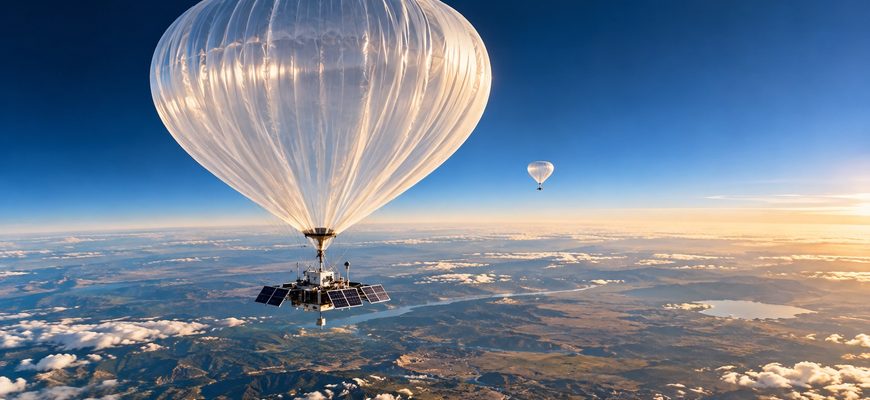
Google Loon tried a different location for part of that equipment: the sky. A large polyethylene balloon carried antennas, electronics, solar panels and batteries high above aircraft and most weather. From that height, radio signals could reach broad areas below.
It wasn’t a satellite. The balloons stayed in Earth’s atmosphere, in the stratosphere at roughly 20 km altitude. They also weren’t fixed towers. They drifted on the wind, and the system had to keep arranging them so coverage stayed where it was needed. Alphabet’s project history describes both the balloon design and the navigation method.

How did internet reach a phone from a balloon?
A balloon high above a village does not magically create internet access. Somewhere in the system, it still needs a connection to the terrestrial internet. Engineers call that connection backhaul, but the idea is simple: the balloon needs a way to reach the network beyond itself.
Google Loon used ground access points and wireless links between balloons. A single ground connection could feed more than one balloon, while each balloon could relay connectivity onward and serve devices below. The team documented an example of seven balloons sharing a connection across a 1,000-kilometre chain in 2018.
Internet connection
A ground station connects the system to an existing telecom network.
Balloon relay
A balloon receives that connection. Other balloons can relay it farther.
Phone service
Cellular equipment on a balloon delivers a mobile signal to compatible phones.
Simplified system diagram. Actual routing depended on ground stations, partners, coverage conditions and the balloon network’s configuration.
The strangest part: steering without an engine
How do you keep an airborne mobile network near the people who need it if every balloon is being pushed by the wind?
Google Loon’s answer was to change altitude. Winds at different heights do not always blow in the same direction. The balloon could rise or descend to catch a more useful current, rather than trying to power its way across the sky like an airplane. Software predicted wind patterns and selected the next altitude.
This was more than a clever drawing on a map. The Google Loon team developed automated flight-control systems and later tested machine-learning navigation. Its engineers published a detailed account of reinforcement learning used in live balloon operations. For readers, the important point is simpler: every balloon’s position was a moving part of the network.
A tower stays where you build it. A Loon balloon had to keep finding a useful place in the sky, while carrying its own power supply and surviving harsh conditions.
Puerto Rico and Kenya: two different kinds of success
In Puerto Rico, the urgent problem in 2017 was damaged communications infrastructure. Google Loon worked with telecommunications partners to provide emergency mobile connectivity in parts of the island after Hurricane Maria. It also helped in Peru following flooding. Those deployments demonstrated how an airborne network could supplement communications after a disaster.
Kenya was a harder business test. In July 2020, Google Loon began commercial service with Telkom Kenya, aimed at reaching underserved regions where conventional network construction was difficult. This was not simply an emergency response: it was a chance to see whether people could be served routinely through floating infrastructure.
Both examples established real utility for Google Loon. Neither, on its own, proved that a fleet of balloons could be operated at a price customers and telecom partners would sustain over the long term. That difference became central to Loon’s fate.
Early public balloon flight tests showed the idea could move beyond a laboratory prototype.
Balloon connectivity supported emergency communications after Hurricane Maria.
Commercial 4G service launched with Telkom Kenya.
Alphabet decided the costs did not support a sustainable Loon business.
| Milestone | What it demonstrated | What it did not establish |
|---|---|---|
| 2017 · Puerto Rico | Balloon-based mobile service could help restore communications after a disaster. | That emergency use would support a permanent, financially sustainable business. |
| 2020 · Kenya | An operator could offer commercial mobile service using the balloon network. | That the economics would work over years and at broader scale. |
| 2021 · Closure | Alphabet judged the cost and commercial risk too high to continue. | That every future high-altitude communications system would be unviable. |
Original il.digital synthesis of project statements and contemporaneous reporting. These are assessments of what the evidence supports, not independent field-test results.
Why Google Loon Shut Down a Working Network
In January 2021, Loon CEO Alastair Westgarth explained that the company had found interested partners but not a way to reduce costs enough for a lasting business. Alphabet’s X division described the road to commercial viability as longer and riskier than hoped. Reuters reported that carriers questioned the practical and economic appeal of the service.
The Google Loon shutdown exposed an important difference between a useful demonstration and a dependable service that pays for itself. A balloon network needs more than flying machines. It needs launch operations, replacement hardware, ground stations, telecom partners, permissions, maintenance, a working network and paying customers.
And its target customers were often people in places where conventional coverage was already too expensive to build. That was the very problem Loon was meant to solve. The need was real, but the business case was exceptionally difficult.
Can it connect?
Balloon navigation, solar-powered equipment and relay links achieved real mobile connectivity.
DemonstratedDoes it help?
Emergency restoration and the Kenya service showed people could use it beyond a laboratory.
Demonstrated in deploymentsCan it last?
The operator still needed costs low enough and demand strong enough for continuous service.
Not sustained by LoonThe part of the internet that could not float away
There’s a practical limit to the image of internet coming out of the clouds. Even Google Loon depended on equipment on the ground. Someone had to connect the balloons to existing networks, keep the local mobile service working and arrange the conditions under which people could use it.
For a telecom operator, the question was not simply whether a balloon could cover a large area. It was whether the whole arrangement—ground links, airborne coverage, coordination and costs—made sense compared with building or improving infrastructure on the ground.
For remote communities and disaster-prone areas, the lesson is not to choose one technology forever. It is to ask what a particular connection is for: emergency recovery, routine access, backup capacity or long-term high-volume service. Different jobs can justify very different infrastructure.
Our earlier report on the islands where the internet comes ashore explores a related question: why the geography of physical connections matters, especially when there are few alternative routes.
The balloons stopped flying. Some of the technology moved on.
Shutting down Google Loon did not erase everything its engineers learned. Alphabet made technical material available through The Loon Collection, including research and operational resources intended to help future projects.
One line of work had a particularly interesting afterlife: using beams of light to send data between flying balloons. That optical communications research helped inspire Taara, which builds wireless links using light rather than flying cellular towers. In March 2025, Taara became an independent company after leaving Alphabet X.
Taara is not Google Loon restarted with a new name. Its technology, deployment and business are different. But it is a concrete example of something surviving a canceled project: a useful technical capability, separated from a business model that did not work.
Google Loon: 3 practical lessons from a failed business
1. Does it function? Has anyone demonstrated the mechanism outside a pitch deck?
2. Does it solve a real problem? Under which conditions, for whom, and how reliably?
3. Can someone keep offering it? Who pays for the hardware, operation, maintenance and replacement?
A clear “yes” to the first two questions does not automatically answer the third. That is the central lesson of Google Loon.
Questions people still ask about Project Loon
Did Google Loon internet balloons actually work?
Yes. Loon provided connectivity in documented deployments, including disaster-response services in Puerto Rico and commercial mobile service with Telkom Kenya. Those successes did not make its long-term business sustainable.
Were the balloons satellites?
No. They flew in Earth’s stratosphere, roughly 20 km above the ground. Satellites orbit Earth much higher up; Loon balloons traveled with atmospheric winds and changed altitude to help navigate.
Why did Google stop Loon?
Alphabet wound Loon down in 2021. The company’s leadership said operating costs could not be reduced enough to build a long-term sustainable business, even though the technology had achieved important milestones.
What happened to the dream of internet in the sky?
Google Loon’s biggest achievement may not have been a particular flight or a speed test. It showed that mobile coverage could come from aircraft drifting in a region of the atmosphere where few people had imagined a working telecommunications service.
But it also exposed a tougher truth about connecting the world. Delivering a signal is only part of the job. Keeping that signal available, affordable and useful year after year is another engineering problem—and another business problem entirely.
The balloons proved that a new route to the internet was possible. Their closure showed why possibility is only the beginning.