Automation / Security & observability
AI agent logs can outlive the task that produced them—and sometimes preserve details that the task was never supposed to keep. A workflow finishes, the temporary worker shuts down, and the user closes the chat. Yet an error record, a tool trace or a copied request may still sit in a log store, ready for a search that happens days later.
That persistence is not necessarily a software defect. Logs exist to help people reconstruct what happened. The privacy and security problem begins when those records contain credentials, private documents or more of a conversation than the operators intended to collect.
What matters: ending an agent run, deleting its chat history and expiring its logs are three different operations. Each can involve different systems, owners and retention rules.
What an agent can leave behind
A tool-using AI agent is usually more than a single model call. It may open a document, invoke a search connector, call an API, write a file and ask the model to decide what to do next. The application often records enough detail to debug those steps. That can include timestamps, error messages, arguments, tool results, request identifiers and execution status.
Not every logging system records full prompts or responses. In fact, reducing collection to the minimum useful fields is usually safer. The problem arises when a developer enables verbose tracing during testing and never revisits what the traces contain before deploying the workflow to real users.
Why a secret can persist after execution stops
Consider a hypothetical research agent that reads a private customer file through an authorized connector. Its main task returns a short summary. Meanwhile, an application-level trace records a longer excerpt of the tool response. The worker then shuts down. The original file still has its normal access controls—but the copied excerpt may now exist in the observability platform under a different set of permissions.
That is a separate copy of data with a separate lifecycle. Rotating a token can invalidate a credential, but it does not erase the old string from a historical log. Deleting a source document cannot guarantee that every log, export or backup containing a fragment has already been purged.
As IL.DIGITAL explored in why deleted files can remain searchable by AI, different representations of the same information may stop being available at different times. The logging case is similar in its persistence, but the data is retained for diagnostics rather than retrieval-augmented answers.

Where the copies actually go
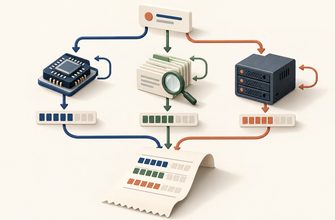
A run can produce application logs, container output, cloud service logs and distributed traces. A collector may export them to a searchable backend and also forward a copy to long-term storage. Developers might download excerpts for incident tickets, post screenshots in team chat or include an event payload in a support case.
The total retention period is therefore not necessarily the setting printed on the first dashboard. A searchable index might expire an event after a week while an archived object, incident attachment or backup remains under a different policy. Security teams should map all of those destinations before claiming that a secret has been deleted.
What should never be recorded as-is
The OWASP Logging Cheat Sheet calls for excluding or transforming sensitive categories such as authentication passwords, access tokens, session identifiers and encryption keys. Its advice matters especially for agent systems that can encounter secrets while using external tools.
Private text is not always an obvious secret. A retrieved paragraph can include health information, financial records or confidential business details. Even when a token is absent, a log can create a privacy incident if it repeats a document the viewer should not see.
A practical design for safer logs
- Minimize at the source. Prefer an explicit allowlist of event fields over sending entire prompts, headers or tool responses.
- Redact before export. Remove sensitive attributes as early as possible, and test for leaks in nested payloads and free-form text.
- Separate access rights. People who can view health metrics do not automatically need access to complete traces containing customer data.
- Set real retention limits. Inventory collectors, searchable indexes, object storage, backups and downloaded incident artifacts.
- Protect the log store. Apply encryption, least privilege, access auditing and alerting to the destination holding the records.
- Make incident response specific. If a credential appears in logs, revoke or rotate it and examine where copies travelled; deletion alone is not credential invalidation.
OpenTelemetry’s sensitive-data guidance explains collector processors that can filter or redact attributes. The specific guarantees depend on what telemetry was created, which fields the processors cover and whether any other exporter or local log captured the information before sanitization.
That is why a filter in the central dashboard is not enough. An upstream service might retain the original event, and a debug export might bypass the redaction stage altogether. A reliable test uses dummy secrets deliberately placed in representative tool responses, then searches every permitted storage destination for the dummy values.
Are logs the same as an agent’s memory?
No. An agent’s memory may be intentionally stored state used to continue tasks or answer future questions. Logs are operational records intended to explain what happened. Both can survive a worker restart, but they may have different owners, permission models and deletion controls. Confusing them creates gaps in data-handling policies.
IL.DIGITAL’s article on how assistants access files without manual uploads explains where connected documents enter the workflow. Once a connected tool returns data, the application still has to decide how much of that result belongs in telemetry.
Questions worth asking before deployment
If the chat is deleted, are the logs deleted too?
Not necessarily. Chat storage and observability storage can have independent retention settings. The application must document exactly which datasets a deletion action covers.
Can redaction remove a secret from an old backup?
Redacting new events does not rewrite historical immutable backups. Teams need separate retention, deletion and incident procedures for those copies.
Should an AI agent log nothing?
No. Carefully scoped logs help diagnose failures and investigate abuse. The goal is useful telemetry without unnecessary private payloads.
The quiet risk is a second copy no one remembers creating. An agent may forget its intermediate steps when the run ends. The monitoring system has no reason to forget them until someone designs that behavior. Treating logs as an intentional data store, rather than harmless exhaust, is where safe automation begins.