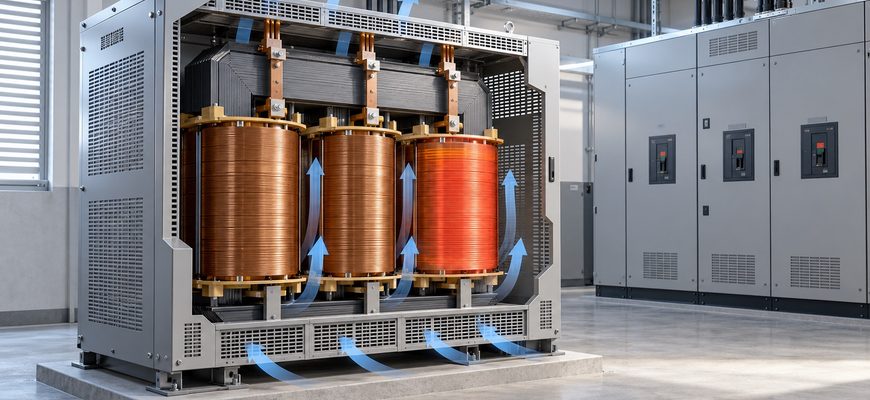
A transformer can be supplying acceptable power to a data center while an excessive internal temperature is shortening its useful life. The servers do not have to lose power for the electrical equipment feeding them to be under thermal stress.
If the condition persists, temperature monitoring may trigger extra cooling, an alarm or a protective shutdown, depending on the installed equipment and protection scheme. A shutdown removes that transformer’s supply path. Whether the servers notice depends on the remaining electrical paths and backup capacity.
The important distinction is between heat damaging equipment over time and protection interrupting power to prevent a worse failure. An alarm, a trip command and an actual loss of supply are separate events.
“Hot” needs a reference point
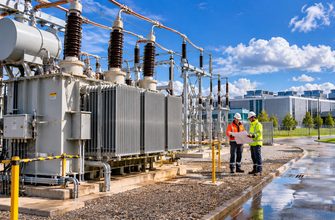
Transformers change voltage levels in the electrical distribution system. Their windings and magnetic core generate heat during normal operation, and the design must carry that heat away.
A temperature rating can be easy to misread. Schneider Electric’s explanation of transformer temperature rise defines it as the average winding temperature above ambient at nameplate loading. A rise value is not simply the temperature someone should expect to see on a cabinet surface.
Nor are an enclosure reading, an oil reading and a winding hot-spot estimate interchangeable. A hot spot is a local region of highest winding temperature, not the average temperature of the whole unit. Eaton’s 2025 transformer-loading brochure identifies hot-spot temperature as a critical variable in estimating insulation aging.
There is consequently no single temperature that means “every data-center transformer must switch off now.” The transformer’s construction, insulation system, cooling arrangement, sensor location and approved protection settings determine how a reading should be interpreted.
The heat can rise without a new server being installed
Higher current increases resistive heating in the windings. But a thermal problem can also begin on the heat-removal side: the same load becomes harder to support if the surrounding air is hotter or ventilation deteriorates.
Eaton’s dry-type transformer installation guidance emphasizes adequate ventilation and air conditions near transformer inlets. An electrical room has its own cooling requirements; comfortable temperatures in the server hall do not establish suitable conditions around the transformer.
Where a transformer relies on fans or other powered cooling equipment, losing that cooling changes the operating conditions. Liquid-filled and dry-type transformers move heat differently, so the same symptom should not be assigned the same cause in both.
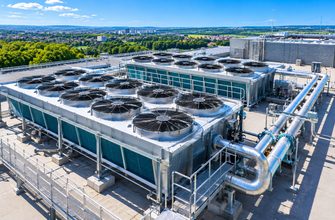
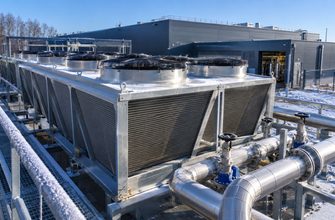
The heat produced in the electrical room is also separate from the heat removed from an AI rack. A facility needs working heat-removal routes for both, even though they serve the same computing workload.
A warning does not open a power circuit
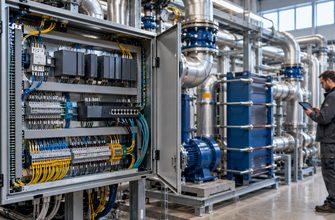
A temperature controller measures or estimates a thermal condition and operates outputs. What those outputs actually do depends on how the installation is engineered and connected.
A useful historical example is Schneider Electric’s Model 98 controller manual, published in 1999. It describes separate fan, alarm and trip functions. Its trip relay provides a contact that can be used to take the transformer offline. The document illustrates the distinction between monitoring and switching; its temperature settings should not be copied to other equipment.
| Event | What it establishes | What it does not establish |
|---|---|---|
| Temperature alarm | A monitored condition crossed its configured alarm threshold. | That the transformer has been disconnected. |
| Trip output operates | The protection system issued its configured trip signal. | That the intended switching device opened successfully. |
| Supply path isolated | The relevant electrical path has been disconnected. | That every protected server lost power. |
An alarm can provide an opportunity for the facility team to reduce thermal stress before isolation is necessary. The response may involve an approved load reduction, restoration of cooling or transfer to another suitable path. None of those outcomes should be inferred merely from an alarm clearing.
A protective trip can be the intended response to an unsafe condition. It is not, by itself, proof that the transformer has suffered permanent damage. Equally, continued operation does not prove that its insulation is unharmed.
The servers may stay online while the facility loses margin
Consider an illustrative arrangement in which the affected transformer supplies the input of a healthy online double-conversion UPS, or uninterruptible power supply. If that input disappears, stored energy can support the UPS output within its ratings and available runtime. Eaton’s UPS topology guidance explains why the inverter in this operating mode can keep supplying the protected load during an input interruption.
That bridge buys time. It does not repair the transformer or create an unlimited alternative supply. A generator or another feed helps only if the electrical arrangement provides a usable route to the load that does not depend on the isolated equipment.
Transferring load also changes the duty of the surviving path. If both paths already operate close to their available capacity, moving demand may create another thermal problem. Redundancy has to cover the post-failure load under the actual ambient and cooling conditions.
The application might see no interruption while operators deal with a reduced-resilience state. That is still a significant facility event: the next fault may have fewer protections left to absorb it. Installed equipment and usable data-center power capacity are different quantities.
Cooling down does not reverse the history
Eaton’s loading guidance treats the magnitude and duration of overload, together with ambient temperature, as factors in transformer degradation. Excessive temperature exposure can consume insulation life even when it never produces a visible outage.
Modern monitoring can help relate those conditions. Hitachi Energy’s TXpert Hub documentation describes winding-temperature monitoring, cooling control and, in applicable configurations, hot-spot and aging calculations. Those calculations are condition assessments, not direct proof of the remaining life of every transformer.
After a thermal event, the useful record includes the load, relevant temperature trends, cooling status and protection operation. Equipment specialists use that evidence and the manufacturer’s requirements to decide what inspection or testing is needed before returning the unit to duty.
A lower reading after load removal does not establish that the cause has been corrected. The operational goal is a transformer that can safely carry its intended load again, with functioning cooling and protection, rather than one that merely stopped reporting an alarm.
Sources
- Schneider Electric: Transformer temperature rise explained
- Eaton: Transformer loading, September 2025
- Eaton: Best practices for installing and inspecting dry-type transformers
- Schneider Electric: Model 98 Digital Temperature Controller, September 1999
- Eaton: Choosing the optimal UPS topology
- Hitachi Energy: TXpert Hub monitoring and thermal assessment