- Key Takeaways
- A data center can have enough electricity and still create a power problem
- Why average demand hides the peaks
- Why thousands of GPUs can change their power consumption together
- Independent work versus synchronized work
- Independent workloads
- Synchronized GPU workload
- The electrical fluctuations do not travel straight from a GPU to the grid
- From computation to electrical demand
- When does fluctuating power become a problem for the grid?
- What researchers found in 2026
- Simulation does not mean an actual blackout
- A real event, but a different mechanism
- An electricity bill cannot show every power fluctuation
- The measurement instrument matters too
- How can AI data centers smooth their power demand?
- Managing changes in electrical demand
- A real hardware example: NVIDIA’s GB300
- What NVIDIA reported
- What energy buffering is designed to change
- Larger storage systems address a different part of the problem
- Five things engineers should measure before scaling an AI cluster
- An operator’s checklist
- A small experiment could reveal the shape of GPU power demand
- From GPU workload to input power
- AI’s next bottleneck may be how fast the power changes
- Sources and reporting notes
On July 22, 2026, an electrical fault in Northern Virginia triggered an extraordinary response. Around 3,800 megawatts of data-center load disconnected from the regional power grid and transferred to backup generation.
The grid operator, PJM, reported large swings in voltage and frequency, although it said the event did not cause significant reliability impacts.
That incident was a sudden disconnection, not an oscillation caused by AI training. But it revealed how the electrical behavior of massive computing facilities can affect the power network around them.
A separate problem can arise when every server is functioning normally. Thousands of GPUs may run the same training workload in coordinated phases, increasing and decreasing their demand together.
The resulting fluctuations can travel through the facility’s power systems. Under certain grid conditions, repeated changes in demand become much more than an internal data-center concern.
A data center can have enough electricity and still create a power problem
When people discuss AI electricity use, they usually focus on total consumption. How many megawatts will a facility need? How much energy will it use in a year? Can the utility provide a connection?
Those are important questions, but they describe only part of the load.
Consider two computing facilities with similar average demand. One operates at a fairly steady level. The other repeatedly jumps between high and lower power.
Both may consume similar energy over a given period. Yet their effects on connected electrical equipment can be very different.
Engineers must understand not only how much electricity is required, but how quickly demand changes and whether those changes repeat.
Why average demand hides the peaks
The dashed line in the illustration gives a useful warning. An average can look stable even when the underlying load repeatedly rises and falls.
This difference matters because electrical systems respond to instantaneous and changing conditions, not simply to the final number on an electricity bill.
Why thousands of GPUs can change their power consumption together
Many conventional data centers run unrelated applications. A web server, a storage system and a database may become busy at different moments.
When their electrical demands are combined, some individual fluctuations can partially cancel one another.
Large AI training clusters can behave differently.
A distributed training job coordinates computation across many accelerators. GPUs perform mathematical operations, exchange information and proceed through successive workload phases.
Their activity is not always identical, and communication can overlap with computation. Nevertheless, synchronized changes in demand are possible.
When a large number of accelerators increase power consumption at roughly the same moment, the aggregate electrical demand can rise sharply.
The same thing can happen in the opposite direction when a computational phase ends.
Independent work versus synchronized work
Independent workloads
Different machines become busy at different times.
Synchronized GPU workload
Many accelerators follow similar compute phases.
Illustrative timing traces, not actual GPU telemetry. The right panel demonstrates correlation between changing loads. Real GPU power depends on the model, runtime, synchronization, utilization and power-management system.
NVIDIA describes this behavior in its engineering analysis of large-scale AI training. The company’s GB300 power design explicitly addresses rapid changes in cluster demand.
The broader lesson is that compute scheduling also has physical consequences.
In our investigation of why one long prompt can slow down other users on an AI server , we examined how GPU scheduling changes response times.
At the scale of synchronized AI clusters, the behavior of computational work can also matter to the electrical equipment feeding it.
The electrical fluctuations do not travel straight from a GPU to the grid
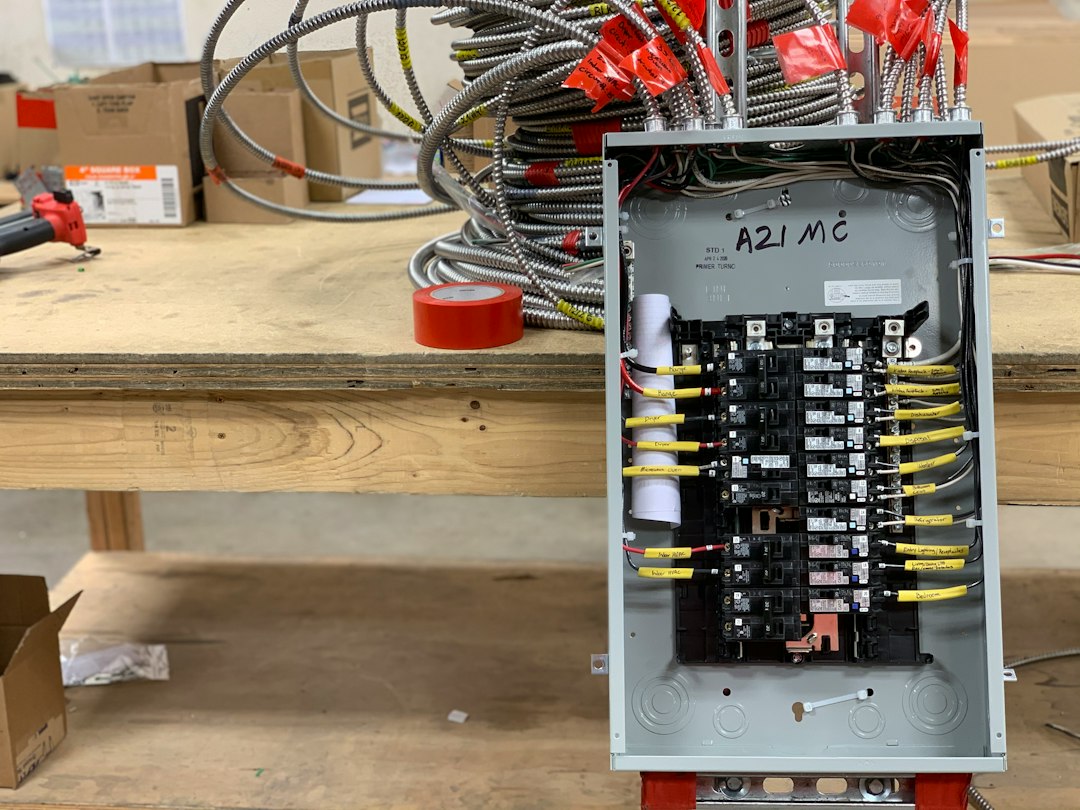
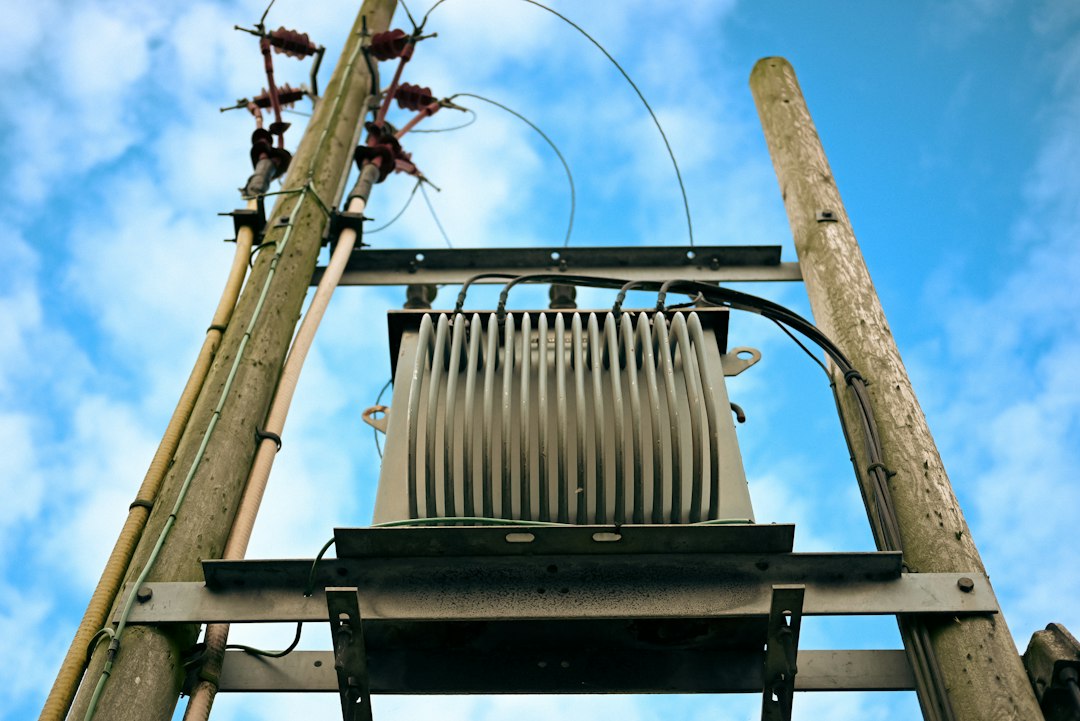
A GPU does not connect directly to a regional electricity network. The power passes through several layers of conversion, distribution and control.
Voltage regulators supply the accelerator. Server power supplies convert electrical power. Rack distribution and facility infrastructure deliver power across the building.
UPS equipment and other power-management systems may sit between the computing hardware and the grid connection.
From computation to electrical demand
Simplified functional sequence. Actual facilities can have different power architectures. Fast GPU-level fluctuations need not appear unchanged at the grid connection.
Each of these layers has its own electrical response and limitations. Some can reduce, delay or otherwise modify a changing load.
This is why engineers distinguish GPU telemetry from measured server input power and from the net demand at the facility’s grid connection.
When does fluctuating power become a problem for the grid?
A changing electrical load is not automatically dangerous. Power networks routinely handle fluctuations in demand.
The concern is how a repeated disturbance interacts with the network’s operating conditions and natural dynamic behavior.
Certain patterns of changing demand can excite oscillations in the broader electrical system. The result depends on the location, frequency and amplitude of the disturbance, as well as network strength and controls.
What researchers found in 2026
In September 2026, Pacific Northwest National Laboratory published a methodology for evaluating reliability risks from large-load-induced oscillations.
The work introduces a framework for identifying vulnerable locations and electrical modes, simulating cyclic data-center demand and evaluating possible consequences.
In the researchers’ modeled grid conditions, even a 50 MW oscillating load at a resonant frequency could generate wide-area swings and operating violations.
Some simulated cases included generator disconnections caused by protection responses.
The research is valuable because it gives utilities a way to investigate this risk before connecting very large computing facilities.
A real event, but a different mechanism
The July 22 PJM event is another illustration of the importance of large computational loads. About 3,800 MW of data-center demand transferred away from the grid following a transmission system fault.
That incident involved a sudden disconnection and the resulting imbalance between generation and demand.
It was not evidence of GPU training oscillations. The two problems require different analysis even though they both concern the behavior of very large electrical loads.
An electricity bill cannot show every power fluctuation
Annual electricity consumption is useful for financial and capacity planning, but it does not explain every rapid change in electrical demand.
Even a shorter demand average can hide activity occurring within the measurement interval.
To understand the problem, engineers need measurements suited to the relevant time scales and physical locations.
Maximum measured demand over a defined observation interval, important for electrical capacity.
How quickly power rises or falls, measured over a chosen time scale.
How frequently repeated demand variations occur and whether they interact with sensitive grid modes.
Measurements showing how the connected electrical network responds to changing demand.
The measurement instrument matters too
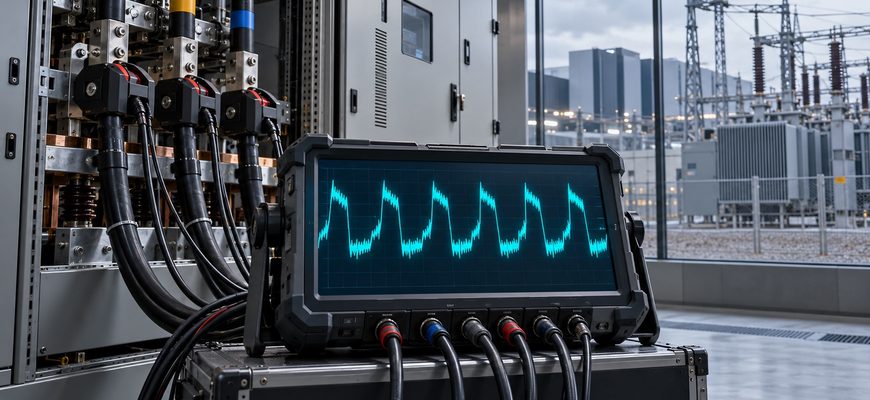
The US Department of Energy highlighted this problem in May 2026.
Phasor measurement units, or PMUs, are valuable for observing many power-system dynamics. But their estimation and filtering can miss or misrepresent certain faster oscillations.
Higher-resolution point-on-wave measurements can preserve additional waveform detail, although they create greater data storage and communication requirements.
The DOE-backed technical assessment recommends complementary monitoring rather than relying on one measurement method for every disturbance.
How can AI data centers smooth their power demand?
The available engineering approaches operate at different time scales.
Some change when computation happens or limit how much power it uses. Others rely on electrical energy storage and controls to alter what upstream equipment sees.
Managing changes in electrical demand
Limits accelerator power demand and can help control electrical peaks.
Trade-off: throughput and completion time may change.
Changes when jobs begin, finish or overlap to influence aggregate load.
Trade-off: some synchronized computations cannot easily be staggered.
Absorbs and releases energy rapidly near the hardware, helping smooth short power fluctuations.
Trade-off: limited stored energy and converter constraints.
Uses battery systems and suitable power electronics to supply or absorb electrical power.
Trade-off: cost, efficiency, aging and control requirements.
Coordinates facility equipment with relevant electrical operating conditions.
Trade-off: requires reliable models and utility coordination.
A real hardware example: NVIDIA’s GB300
NVIDIA has documented a power-smoothing approach for its GB300 NVL72 platform.
The design combines programmable power controls, integrated capacitor energy storage and mechanisms for controlling changes in demand.
Capacitors can help provide energy during short peaks and recharge as the computing load falls.
NVIDIA also describes techniques that make the drop in power after a training job finishes more gradual.
The interesting part is that electrical stability and minimum instantaneous energy use are not always the same optimization target.
A system may deliberately control a falling load more gradually to reduce the disturbance it presents to upstream power equipment.
What energy buffering is designed to change
Larger storage systems address a different part of the problem
A capacitor bank integrated into server power hardware is not the same as a facility-scale battery energy storage system.
Batteries paired with suitable inverters and controls may help the entire facility manage demand fluctuations and certain electrical disturbances.
A PNNL-listed journal article published on October 16, 2026, examined grid-forming energy storage systems using electromagnetic transient simulations.
The researchers modeled AI data-center demand together with power equipment, cooling, local generation and energy storage.
Their results indicate that adequately designed and controlled storage can improve several dynamic response measures and reduce modeled oscillations.
Again, these are simulation results, not evidence that simply installing any battery will solve a facility’s grid-stability problem.
Five things engineers should measure before scaling an AI cluster
A useful electrical assessment needs to follow the workload all the way to the facility connection.
This is also why cooling, electrical distribution and compute design cannot be treated as completely separate problems.
Our earlier investigation of the heat produced by a 135 kW AI rack followed electrical energy after it entered the equipment and became heat.
Power dynamics concern an earlier part of the same physical story: how demand changes before that energy becomes heat.
A small experiment could reveal the shape of GPU power demand
Measuring an entire AI data-center campus requires equipment and access that most independent publications do not have.
But a controlled single-server experiment could still provide useful first-party evidence about how compute activity changes input power.
AI’s next bottleneck may be how fast the power changes
A large computing facility needs more than enough GPUs, enough cooling and a connection with a sufficient megawatt rating.
Its electrical systems must also accommodate the way those machines actually work.
Faster accelerators and more efficient models do not remove the need for electrical engineering. Large synchronized workloads make coordination between software, hardware, storage systems and the electricity grid increasingly important.
The revealing number is not always the maximum power a facility can draw. Sometimes it is how abruptly that demand changes, how often the change repeats and whether the surrounding electrical infrastructure is ready.
Sources and reporting notes
This article is based on published engineering research, grid-operator reporting and manufacturer documentation. il.digital did not conduct a facility-level power measurement or grid simulation.
- Pacific Northwest National Laboratory — A Methodology to Evaluate the Grid Reliability Impact of Oscillations Induced by Large Loads . September 22, 2026.
- Pacific Northwest National Laboratory — Using Grid-Forming Energy Storage Systems to Provide Dynamic Active Power Support for Hyperscale Data Centers . October 16, 2026.
- US Department of Energy — Monitoring Oscillations from Large Data Centers . May 28, 2026.
- NVIDIA Technical Blog — How New GB300 NVL72 Features Provide Steady Power for AI . July 28, 2025.
- PJM — PJM, Dominion Review Large Load Transfer Event . August 11, 2026.